Pop Art Comic Digital Paper Backgrounds: Instant Visual Impact
Injecting Energy and Personality into Your Projects
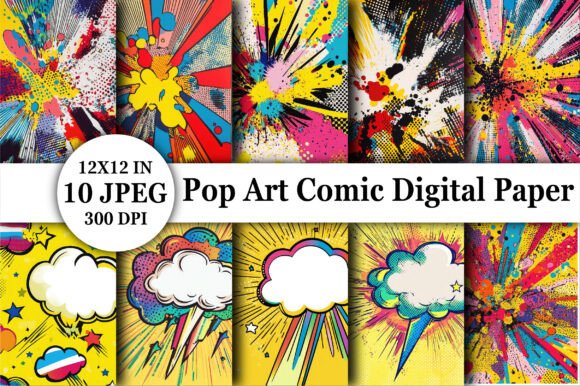
There’s an unmistakable energy to Pop Art. It’s bold, it’s loud, and it commands attention in a way that feels both nostalgic and perpetually fresh. For designers, marketers, and creators, capturing that specific comic-book dynamism often requires sourcing the right textures and patterns. This is where the Pop Art Comic Digital Paper Backgrounds set enters the conversation. It’s not just a collection of colors; it is a curated toolkit designed to bypass the hours spent creating halftone dots, Ben-Day patterns, and speech bubble textures from scratch. By offering ten distinct high-resolution JPEG files, this collection provides the visual vocabulary of classic comics, ready to be dropped into any modern workflow.
The appeal lies in the versatility of the aesthetic. Whether you are building a brand identity for a retro-inspired startup or designing a one-off flyer for a neighborhood event, the visual language of Pop Art communicates excitement and accessibility. These backgrounds serve as the perfect foundation, allowing foreground elements—be it text, photography, or illustrations—to pop against a textured, dynamic canvas. It bridges the gap between professional design assets and the playful spirit of mid-century comics.
Deconstructing the Visual Toolkit
When we talk about the visual characteristics of this collection, we are looking at more than just static images. The set includes ten individual files, each measuring 12" x 12" at 300 DPI. This specification is crucial for anyone working in print media. High resolution ensures that the textures remain crisp, whether they are used for scrapbooking, printed invitations, or large-scale desktop backgrounds. The pixel density prevents the blurring or pixelation that often plagues lower-quality digital assets, ensuring a professional finish in commercial applications.
Visually, the personality of these papers is defined by the classic tropes of comic book art. You will find high-contrast color palettes—think primary reds, blues, and yellows—interlocked with stark black outlines and the rhythmic repetition of halftone shading. This style of modern typography and background texture naturally guides the viewer's eye. It creates a sense of movement and action that flat, solid colors simply cannot achieve. For a designer, using these backgrounds implies a deliberate stylistic choice: you are choosing to be loud, vibrant, and engaging rather than subtle and reserved.
Strategic Applications Across Industries
The utility of the Pop Art Comic Digital Paper Backgrounds extends far beyond simple decoration. For entrepreneurs and small business owners, these files are a gateway to distinct brand identity. Imagine a local pizza shop or a comic book store using these textures for their menu designs or loyalty cards. The aesthetic immediately sets a tone of fun and approachability. It tells the customer that the brand doesn't take itself too seriously, yet cares enough about presentation to use high-quality design assets.
For content creators and bloggers, the applications are equally practical. In the realm of social media graphics, stopping the scroll is the primary objective. A blog post header or an Instagram story featuring a vibrant Pop Art background immediately breaks the visual monotony of a user's feed. It provides a high-energy backdrop for announcements, sales, or quotes. Furthermore, these files are ideal for packaging design. If you are selling a physical product, using these patterns on inserts, stickers, or box liners can elevate the unboxing experience, making the product feel curated and premium.
Integrating the Assets into Your Design Workflow
Working with these backgrounds requires a practical understanding of layering and composition. Because the files are JPEGs, they function best as base layers. In editorial design, such as creating a magazine spread or a newsletter, a designer might lower the opacity of the background slightly to ensure that body text—whether it is a serif font for readability or a sans serif font for modern simplicity—remains legible. The key is contrast. A busy background requires clean, bold foreground elements.
One of the most effective ways to utilize this set is for logo design presentations or mockups. If you have designed a logo for a client, presenting it against a textured, colored background rather than a sterile white canvas helps the client visualize the logo in a real-world context. It adds personality to the pitch. Additionally, for those in the printing business, these files are perfect for creating printing labels or unique greeting cards. The 12x12 inch format is particularly convenient for square card layouts, offering ample room for bleed and trim.
Technical Considerations and Best Practices
While the aesthetic is playful, the technical execution of your projects should remain rigorous. Since you are purchasing a digital file only, it is important to understand how to manage these assets. Keep the original ZIP file backed up. When you extract the JPEGs, organize them in a dedicated "Textures" or "Backgrounds" folder within your design library. This ensures that when you are in the middle of a fast-paced project, you aren't wasting time searching for the right pattern.
When evaluating the fit of these Pop Art Comic Digital Paper Backgrounds for a specific project, consider the emotional resonance of the audience. This style works exceptionally well for youth-oriented brands, entertainment industries, and casual dining. However, it might clash with industries that require a tone of somber authority, such as legal or financial services. That said, in the right context, these backgrounds can transform a mundane corporate newsletter into an engaging read. The versatility of the creative font and texture combinations you can create is vast, allowing for everything from subtle texture overlays to full-blown retro collages.
Ultimately, this collection is about efficiency and impact. It provides the raw materials for a specific, highly sought-after visual style. By incorporating these backgrounds into your toolkit, you are equipping yourself to handle projects that require a burst of creativity and a nod to the golden age of comics, all while maintaining the high standards of contemporary web design and print production.