Transforming Your Projects with Old Dictionary Paper Backgrounds
There is a distinct, quiet authority in the printed word, a tangible connection to history that digital text simply cannot replicate. We often chase the newest trends in modern typography, looking for the perfect sans serif font or sleek script font, but sometimes the most compelling visual story is told through the patina of age. That is precisely where Old Dictionary Paper Backgrounds come into play. These are not just textures; they are visual narratives. Featuring the intricate columns, faded ink, and imperfections of vintage lexicography, these backgrounds offer a sophisticated, intellectual aesthetic that adds immediate depth and character to any creative project.
The Anatomy of a Timeless Texture
When we talk about Old Dictionary Paper Backgrounds, we are discussing a specific visual language. Unlike a generic crumpled paper texture, dictionary paper carries the weight of structure. You have the justification of the text, the varying densities of the definitions, and the subtle yellowing that comes with time. This specific aesthetic acts as a grounding element. It provides a complex surface that feels organic and authentic.
In the world of design assets, versatility is the holy grail. These backgrounds achieve that versatility through their neutrality. While they are visually busy with text, they are tonally quiet. They serve as a perfect "supporting actor" to your main content. Whether you are using a bold display font for a headline or a delicate handwritten font for a personal note, the dictionary background provides enough contrast to make the foreground pop without overwhelming the viewer. It is a masterclass in visual hierarchy, where the texture sets the mood, and your typography carries the message.
Practical Applications for Modern Creators
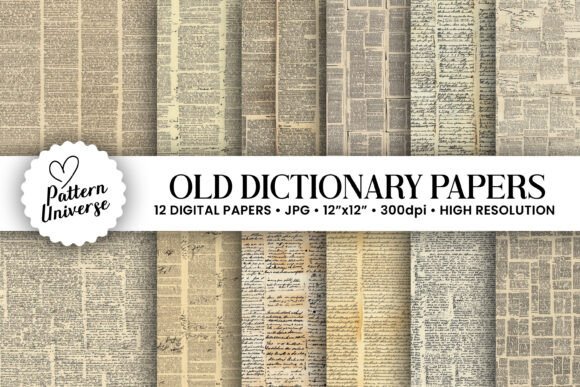
As a designer or entrepreneur, you are constantly looking for ways to elevate your output without spending hours on custom illustration. Old Dictionary Paper Backgrounds bridge the gap between vintage charm and professional utility. Here is how this collection of 12 seamless patterns can be integrated into your workflow:
- Tangible Craft and Junk Journaling: For the hobbyist, these papers are gold. They are perfect for junk journal backgrounds, offering a cohesive theme for pages. The seamless nature of the patterns ensures that you can print large layouts without visible seams, which is crucial for scrapbook layouts and wall art.
- Packaging and Product Design: If you are selling artisanal goods, candles, or coffee, the texture of your packaging speaks volumes. Using these backgrounds for gift wrapping or tumbler wraps immediately communicates a sense of craftsmanship and tradition. It pairs exceptionally well with packaging design that utilizes a classic serif font or a bold logo design.
- Digital and Editorial Design: In the realm of web design and editorial design, texture can break up the monotony of flat colors. These backgrounds work beautifully as hero image overlays or sidebar textures. They add a tactile quality to digital screens, making social media graphics and blog headers feel more "sticky" and engaging.
- Event Stationery: The vintage aesthetic is a staple in invitations and greeting cards. A dictionary background lends an air of sophistication to wedding invitations or literary-themed events. It suggests that the event itself will be a classic, memorable affair.
Integrating Texture into Your Brand Identity
When building a brand identity, consistency is key, but so is personality. A brand that utilizes Old Dictionary Paper Backgrounds is telling its audience that it values history, knowledge, and timelessness. This is a powerful psychological trigger. It suggests that the brand is established and trustworthy.
However, integration requires a strategic eye. You cannot simply throw a texture behind text and hope for the best. You must consider readability and visual hierarchy. Because the dictionary paper contains fine lines of text, you need to ensure your primary message isn't lost in the noise.
I recommend treating the background as a semi-transparent overlay. In your design software, lower the opacity of the dictionary paper to perhaps 20-30% if you are placing large blocks of body copy over it. If you are using it for a poster or a card where the text is minimal and large, you can afford to let the texture be more prominent. This is where testing font pairings becomes essential. A heavy, geometric modern typography style often contrasts beautifully against the organic, serif-heavy nature of a dictionary page. This contrast creates visual tension that draws the eye.
Maximizing Your Design Assets
This collection includes 12 distinct digital papers, all delivered in a high-resolution 300dpi format at 3600 x 3600 pixels. For the uninitiated, 300dpi is the industry standard for print quality. This means you can scale these backgrounds for large format printing, such as wall art or posters, without pixelation. The 12" x 12" size is also the standard for digital scrapbooking, making them ready to drop into your layout immediately.
When working with premium font assets, you want a background that matches that quality. Low-resolution textures can cheapen the look of a high-end typeface. These files ensure that your final output—whether it is a digital download or a physical product—looks polished and professional.
Design Tips for Best Results
- Color Grading: Don't be afraid to manipulate the color of the paper. While the natural sepia or cream tones are classic, applying a "multiply" blending mode in Photoshop allows you to colorize the paper to match your client's specific color palette.
- Layering: Combine the dictionary paper with other textures. A subtle grain or a light leak over the dictionary paper can add a photographic quality that works well for social media graphics.
- Negative Space: Look for areas in the seamless pattern that have less text or larger margins. Use these specific zones to place your logo design or critical headline text to ensure maximum legibility.
Ultimately, Old Dictionary Paper Backgrounds